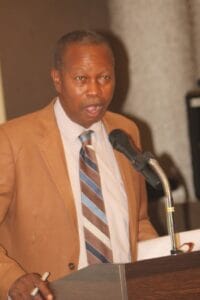
(December 15 2025)Hon. Elizabeth Gblah-Johnson, Country Director of Action Aid Liberia;Honorable Ministers of Government;Members of the Dplomatic Corps;Leaders of Civil Society Organisations;Representatives of Women and Youth Networks;Development Partners;Distinguished Farmers;Green Entrepreneurs;Ladies and GentlemenI bring you warm greetings and sincere appreciation on behalf of the National Disaster Management Agency of the Republic of Liberia. To begin with, I will like to express my profound gratitude to Action Aid Liberia for convening the 2nd National Climate Justice Summit and for extending the honor of serving as a strategic partner to the National Disaster Management Agency – the NDMA.This collaboration reflects a shared understanding that climate justice and disaster risk management are deeply interconnected and mutually reinforcing foundations for sustainable development. It also affirms collective commitment to ensuring that the voices of the most vulnerable populations are meaningfully integrated into national climate action. We gather today at a defining moment in Liberia’s development trajectory.Climate change is no longer a future risk. It is an everyday reality affecting our coastal communities through erosion and sea level rise, our farmers through inconsistent rainfall and declining productivity, our urban settlements through recurrent flooding, and our national economy through rising losses and increasing vulnerability. These realities compel us to move beyond fragmented responses towards integrated, inclusive, and justice-centered solutions.The theme of this summit, “Climate Financing for Agroecology and Renewal Energy”, speaks directly to the imperative. It recognises that resilience must be built simultaneously across livelihoods, ecosystems, and energy systems in ways that promote equity, sustainability and natural ownership. This Summit is firmly anchored in continental and global frameworks that Liberia has committed to uphold.The Sendai Framework for Disaster Risk Reduction reminds us that prevention, preparedness, and resilience are investments in development. The Paris Agreement calls for climate action that is equitable and responsive to national circumstances. The African Union Agenda 2063 envisions a resilient and prosperous Africa driven by its people. The Comprehensive Africa Agriculture Development Programme positions agriculture as a cornerstone of food security, inclusive growth, and climate adaptation. Together, these frameworks affirm that climate justice must be embedded in policy, financing and implementation at all levels.Agroecology offers Liberia an opportunity to strengthen food systems, restore ecosystems, and reduce vulnerability to climate shocks. It empowers smallholder farmers, particularly women and Youth, enhance local knowledge systems, and promote sustainable land management. Investing in Agroecology is an investment in resilience, dignity, and long-term food security.Access to clean and affordable energy is central to climate justice. The transition to renewable energy must be inclusive and equitable, ensuring that rural communities and underserved populations benefit from national energy investments. Renewable energy creates opportunities for innovation, entrepreneurship, and employment while reducing environmental degradation and strengthening resilience.Climate Financing must move beyond commitments – towards measurable impact. Resources must reach communities on the frontlines of climate risk. Women and youth must be empowered to engage meaningfully in national and continental processes. Adequate climate finance is transparent, inclusive, accountable, and responsive to community priorities.As Liberia’s primary institution for disaster risk management, the NDMA remains fully committed to mainstreaming resilience as a core principle of national governance, integrating climate justice into disaster risk reduction and preparedness frameworks, aligning national systems with international best practices while ensuring inclusiveness, equity, and natural ownership. Our objective is clear: Liberia’s climate justice agenda must be totally grounded, nationally led, and globally aligned.Distinguished participants, let this summit not only as a forum for dialogue, but also as a catalyst for action. Let it inspire national commitment to Agroecology, speed up investments in renewable energy, and empower a new generation of climate leaders. Together, we can turn vulnerability into resilience, marginalisation into participation, and climate justice into shared prosperity. This is our collective responsibility and our shared opportunity.Finally, I reaffirm the National Disaster Management Agency’s commitment to working closely with Action Aid Liberia, government’s Ministries and Agencies, civil society organisations, and our International partners. May this summit be remembered as a milestone in Liberia’s journey towards climate justice, resilience, and sustainable development.I thank you for your attention, and I wish the summit fruitful deliberations and lasting impact. I am honoured.